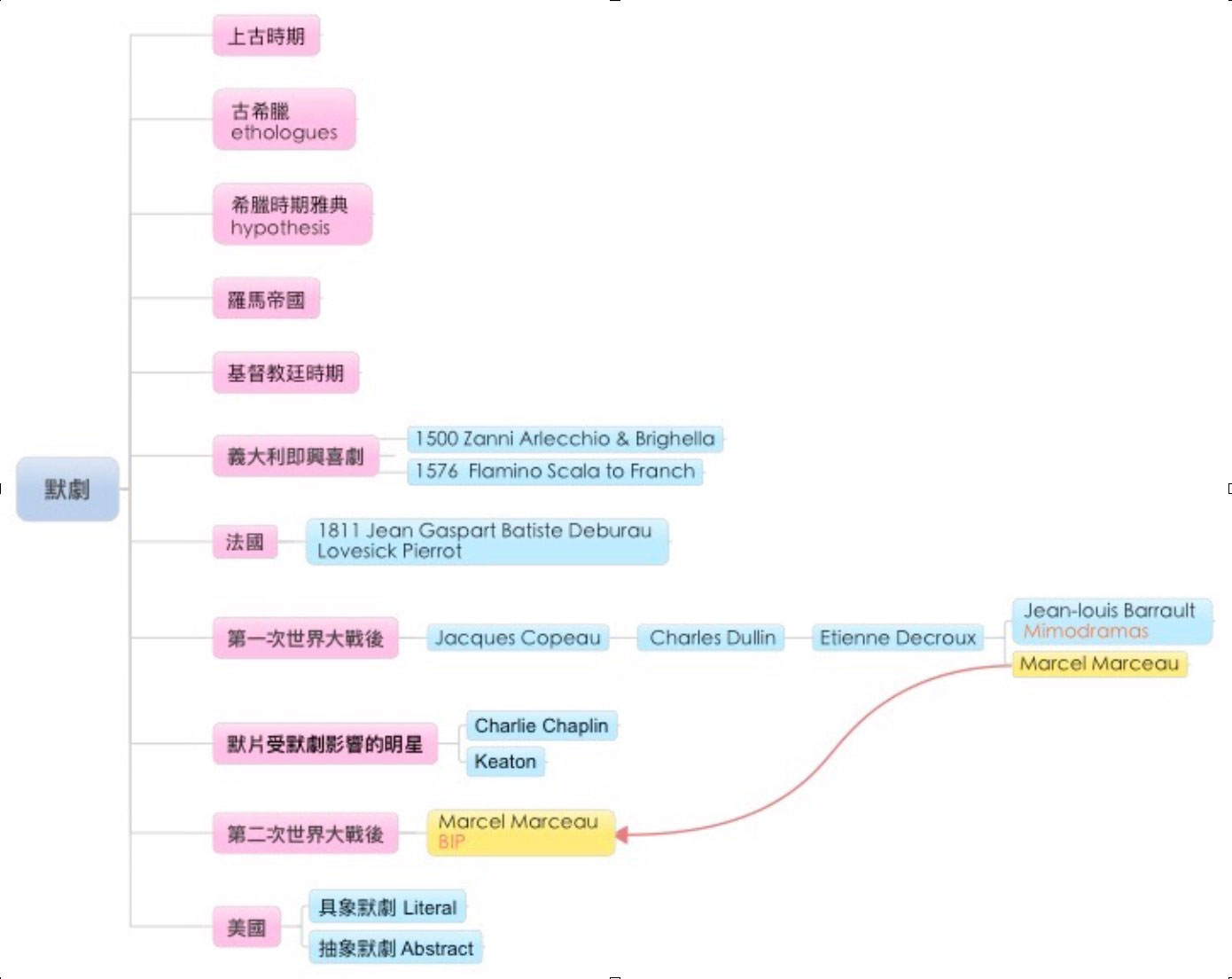
又過了兩個半世紀左右,於1811年來自波西米亞的雜耍家庭在巴黎做了演出。家庭成員中的兒子 Jean Gaspart Batiste Deburau (尚。德布侯)在 Boulvard du Temple 做了一場名為:走鋼索的人,的演出後,他就一直在這個劇場演出直到他去世。在劇場的期間,他將默劇中屬於粗鄙的鬧劇捨棄,將其轉換成我們現今所看見的默劇形式。
第一次世界大戰後,默劇從 Jacques Copeau (賈克。庫柏)在 Vieux-Columbier School 裡收了一位學生 Charles Dullin 後,默劇有了新的動力。而 Charles Dullin 的弟子 Etienne Decroux 將將這些新動力注入舞台生命,並與自己的弟子 Jean-louis Barrault 合作發展並制定了現代默劇的構成要素。
後來Barrault走出了自己的默劇路,並創建了“默劇劇場”(Mimodramas)。
Decroux 和 Barrault 兩人都曾出現在法國很有名的電影裡:“Les enfants du paradis”天堂的孩子們。故事是來自Deburau的虛構傳記,這部電影拍攝於1945年的巴黎,在蓋世太保的嚴密監控下完成了拍攝。他後來也在Funambules演出。
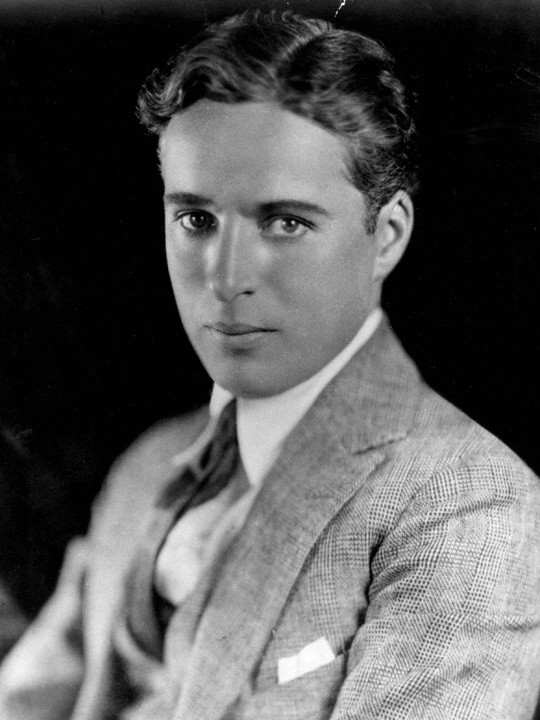
查爾斯·史賓賽·「查理」·卓別林爵士,KBE(英語:Sir Charles Spencer “Charlie" Chaplin,1889年4月16日-1977年12月25日)是一位英國喜劇演員及反戰人士,後來也成為一名非常出色的導演[2]。卓別林在在好萊塢電影的早期和中期尤為成功活躍。他奠定了現代喜劇電影的基礎,與巴斯特·基頓、哈羅德·勞埃德並稱為「世界三大喜劇演員」,卓別林戴著圓頂硬禮帽和禮服的模樣幾乎成了喜劇電影的重要代表,往後不少藝人都模仿過他的表演方式。
A number of years ago, when I first decided to write a book on mime technique. a publisher said he was interested in the idea only if I did an extensive chapter on the history. I spent six months in the New York Public Library doing research, looked at every book on every primitive culture I could think of, every book on the Commedia dell’ Arte, every book on theatre history, Greek theatre, Roman theatre, Hindu theatre, Chinese theatre, French theatre, and English theatre in the place. I started writing the chapter according to my view of the world at that time—this was before I became the mystic I am today. At that time I was a materialist who believed in economic determinism, and I organized the chapter into: “Mime Under Primitive Communal Systems," which included the early cavemen, the American Indians, the Eskimos, many tribes in Africa, South American Indians, Australian Aborigines, natives of New Guinea, and others; “Mime Under Slavery," which included the Ancient Egyptians, the Greeks, the Romans, and others; “Mime Under Feudalism," which brought us into European theatre and the Commedia. Javanese and Balinese theatre, and others; and finally “Mime in the Modern Western World," with a further note on mime as an offshoot of dance and as an offshoot of comedy. Rather than go into vast detail in this book, which is really supposed to be only about the technique, I’ll just give you some of my conclusions. Every primitive culture had mime as part of its religious ceremonies and as part of its entertainment participation events. The primitive early caveman probably danced about what he was going to do on the hunt, and then, when he returned home, enacted what had actually taken place. The cave drawings in southern France and northern Spain indicate this, and the pattern is repeated in all primitive cultures-the acting out of events, real or hoped for, is universal in the history of man. As man became more sophisticated, the dramas became more complicated, and included propitiation of the gods, legends, myths, history, and finally, mere entertainment. There are few primitive peoples without a war dance, and the pattern has usually been: Challenge, Pursuit, Conflict, and Defeat. Sounds like lots of today’s movies. These people also tended to imitate nature around them, and animal characters were performed by many primitive mimes: the American Indians with their Eagle dance, the Balinesians with their Monkey dance, the Australian bushman miming the baboon, or a swarm of bees, etc. Most of these people also did harvest dances, and weather dances. The drama of the Orient is all based on mime: Hindu dance is simply gesture. language which has been stylized into an abstraction of the original literal form, but can be understood by anyone with only a minimum of exposure; Siamese dance is similarly based on mime, and Japanese Kabuki remains essentially mime theatre; the Peking opera was a mime theatre, but unfortunately its are being lost since the recent conversion of its traditional forms to a political theatre. Most of these Oriental theatre forms portray stories and legends Gods or great heroes in movement, sometimes accompanied with a text that is sung.
The ancient Egyptians probably had some kind of a mime theatre, and it was probably religious. It is from the Greeks, however, that the mainstream of modern mime can clearly be traced. Before the performance of the tragedies it was common for the actors to do a mime show as a kind of introduction. The principal mimes were called Ethologues, which means painters of manners. and they tried to teach moral lessons in their work. In addition, farces and other such clowning were performed. During the plays, the choruses were miming as they spoke, and reacting with physical movement to what occurred. Aristotle mentions mimetic dances in his descriptions of these plays. The Greeks also had the Pyrrhic dances, which were a kind of military pantomime: one showed a fight with shields, another was a battle against shadows, and another depicted single combat. There is a rumor that most of the Greek mimes came from Sicily, and another that Livius Andronicus, a Greek, first did pantomime in Rome. Whichever, it seems that Emperor Augustus of Rome liked pantomime, and it thrived under his reign, even though most of the mimes were slaves. The subjects of the Roman mime performances were probably based on mythology, and if you are familiar with mythology you’ll know that there was plenty of room for adventure, tomfoolery, and anything else. There was sometimes an offstage speaker during these performances, but the players themselves did not speak. It may be noted that mimes were condemned by the early Christian writers because of their lewd conduct and revealing costumes. The Roman Empire split, and the Eastern half, centered in Constantinople, became the cultural center. When the Roman Empire fell, the Eastern area became the repository of its culture, and when Constantinople fell to the Turks in the fifteenth century, the mimes fled, traveling throughout Europe. Meanwhile, back in the West, the Church, from the tenth century on, began to accept theatre, instead of condemning it, and actors now began to do Mystery and Morality plays with religious themes, many of these in mime. They did stories from the Bible and lives of saints, and moral problems of common people, first in the churches, and later in private theatres, in streets, and in parks. By the time the Byzantine mimes returned from Constantinople, the Italian theatre was as vulgar as it was religious, and out of this union grew the Commedia dell’ Arte. The Commedia was an improvised theatre wherein the actors played stock parts, with variations in the scripts-like today’s television soap opera series. The shows were improvised, and were full of mime and visual schticks which they called Lazzi. If you are really interested in this theatre, there is a good. book called Commedia dell’ Arte, by Pierre Du Chartre, and another by him called Italian Comedy, which I would recommend. We can see from Shakespeare’s Hamlet that mime, which was probably brought there by the Romans, was very much in evidence in England. It was continued there by John Rich in the early seventeen hundreds and later, at the end of that century, by the most famous English mime, Joseph Grimaldi, a brilliant satirist. By the early eighteen hundreds pantomime in England began to change, grad. ually growing (or deteriorating, depending on your point of view) into its present form, which is musical theatre, with mime, singing, dancing, and speaking. In France, during the beginning of the eighteen hundreds, a mime developed who is still a great influence today. Perhaps you have seen the French film which is a fictional biography of him, called Les Enfants du Paradis (“Children of Paradise"). His name was Jean Gaspard Batiste Debureau, and his theatre was called The Funambules. Debureau changed mime from slapstick to theatre: he did stories with plots, with character interaction, with contemporary mean. ing. He chose to play the character of Pierrot, instead of the traditional leading. man, Harlequin, and his theatre was successful until the early 1840s. After Debureau’s time, mime in Europe became a secondary art form, although it survived as part of an actor’s training, and occasional mimes were found doing performances in theatres and night clubs. The real father of modern mime is Etienne Decroux. He studied at the VieuxColumbier school of the theatre in Paris, under Charles Dullin, in the early 1920s, became interested in dramatic movement and in mime, and then did the research that lead to the modern technique. He practiced, formulated exercises, created illusions, and eventually taught. Decroux is a great theoretician, but never had the charisma that is required for a star performer. His students, however, fulfilled his dream. Jean-Louis Barrault performed the role of Debureau in Les Enfants du Paradis, and went on to become France’s greatest stage performer. In that film, Decroux plays the role of Debureau’s father. And Marcel Marceau, a French Jew, finally spread Decroux’ message over the world. The basic difference in the performances of these three men is this: Decroux, in performance, shows the technique. Each move is done separately and individually, each action spelled out. You become engrossed in the skill of physical movement, the perfection of each gesture; but you do tend to forget the story, and eventually the exhibition may become dull to the ordinary theatergoer. I, of course, found it fascinating, as would any mime, but I don’t advocate it as a way of communicating with an audience. Barrault does stories in mime, and his work is directly related to that of Debureau, who he played in the film. He uses several characters in his stories, and generally does period pieces. I find his work moving and beautiful. Marceau is, I feel, the greatest mime in the world at doing his particular thing, which is-Showing How a Man Does Things. He shows how a man rides on a train, or catches a butterfly, or tames a lion, or he portrays the various characters you’d meet in a park. His eye for the foibles of human behavior is brilliant, and the nuances he captures ring with a universal truth that has never failed to capture his audiences in any country. Most of the other mimes I have seen use Marceau’s technique. They try to emulate him, and show how a man does things, but no one does as well as he. A few have developed their own style, but most have not only copied Marceau’s style, they have even acquired his personal movement habits. In America today there are several mimes-Tony Montanaro, who was in my company in 1953 or ’54, is in New York doing excellent work. He worked in France and Italy in 1956 and ’57, and has his own style. Paul Curtis in New York directs The American Mime Theatre. Paul was a student of Decroux, and has developed his own personal approach to mime which he calls “American Mime." Rusdi Lane is in Los Angeles. Several Israeli mimes have toured the United States, and two of them make their home in New York: Solomon Yakim and Juki Arkin; and Claude Kipnes is now making his home in this country. Bernard Bragg, a deaf and dumb mime, is now working with the Theatre of the Deaf. Ron Davis, in San Francisco, has stopped performing mime, even though he calls his troupe The San Francisco Mime Troupe. They do a kind of hip contemporary minstrel show, and are famous for being busted for obscenity. Actually, all protest theatre is obscene to the Establishment, so they are really being arrested for their rebel ideas, rather than for their language. Most night clubs in Europe have mime acts in them, and Decroux‘ students, and the students of his students, are all over the world. Poland has a national Mime theatre, which does very strong athletic mime, with generally somber themes, and Czechoslovakia has the Prague Mime Theatre, which recreates a kind of Commedia feeling, and leans to comedy. Both of these marvelous troupes tour the world, and get rave reviews everywhere except in New York, where, if you’re not exactly like Marceau, you tend to get blasted. They have mostly one frame of reference there, and deviation is not tolerated. My own work tends to be in the line from Debureau through Barrault, to today. I do stories with plots and characters that are about contemporary themes: war and peace, man’s relationships with his fellow man, love, etc. And, in the tradition of the Romans, I sometimes use offstage narration for some of the pieces. I always use live music with my performances. Recorded music can’t be used well the timing may be different from night to night, and a laugh may hold up a moment for varying lengths of time. I must, of course, mention the great mimes of film: Chaplin, who influenced Marceau tremendously, Keaton, W. C. Fields, Stan Laurel, Harpo Marx, Harold Lloyd, and others. They found their techniques through necessity, but all tended to adhere instinctively to the mime technique obligations. Many contemporary comedians are natural mimes, like Red Skelton, who has carried it further than anyone today, Jerry Lewis, Sid Caesar, Adam Keefe, Zero Mostel, Dick Van Dyke, George Hopkins, Frank Gorshin, Richie Pryor, Jackie Gleason, Lucille Ball, Jonathan Winters, Flip Wilson, Guy Marks, and most of the impressionists, like Rich Little, Dave Frye, and George Kirby. And finally, there have been dancers, like Mata and Hari, Angna Enters, and others, who found mime as an offshoot of dance. Mime seems to be spreading today, probably mostly because of the television appearances of Marceau. Hopefully, this trend will continue.

 Julien's Art Works