
Inclination and rotation of each part separately; transtations; mirror exercise; transtation circles; illusion of climbing a ladder; duets.
Inclination and Rotation of Each Part Separately:
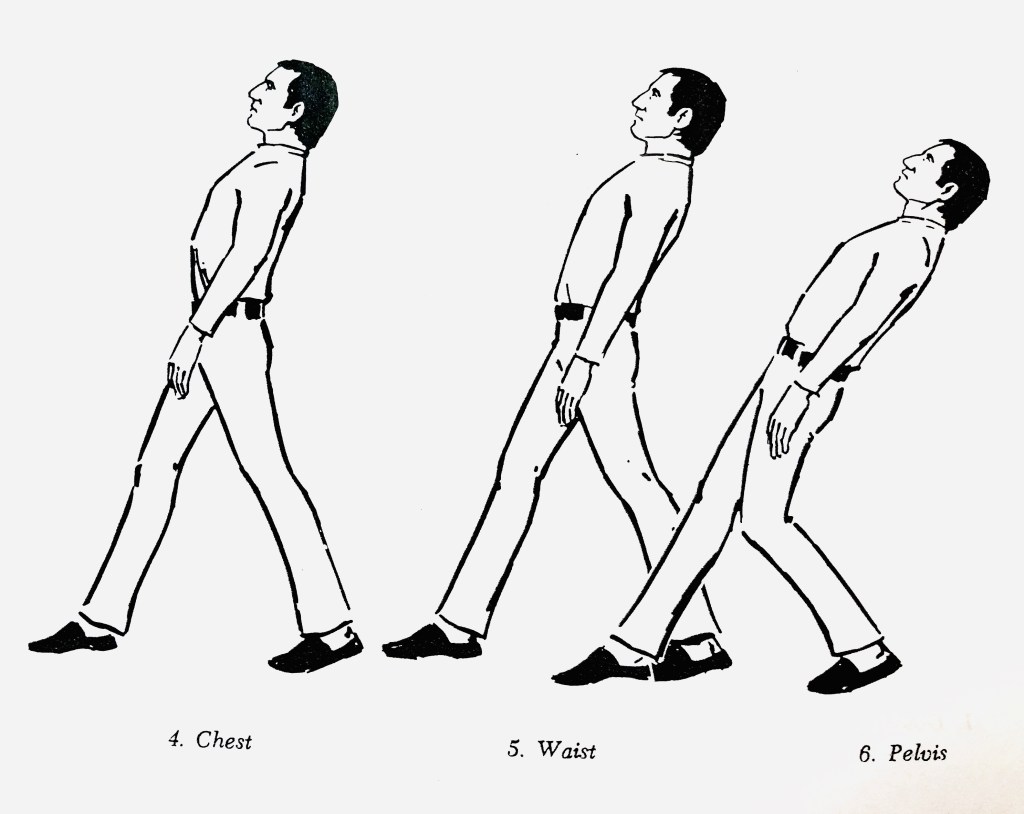
Start in the double-zero posi. tion, and incline the head forward. Bring it back to the center. Repeat this several times. Now, keeping the same angle between the head and neck, incline just the neck forward, and bring it back up. You will feel it pull at the back of the neck. Do this several times. Don’t let the head incline too far— keep it in line with the neck. Now incline the head forward, keep it there, and incline the neck forward: bring the neck up, and then the head. Now the chest: Incline it forward while keeping the head and neck in line with it, and then back to center, and do it several times. Then incline the head, then the neck, and then the chest forward, and then up in the usual manner: chest, then neck, then head. Now incline just the waist forward, keeping the head, neck and chest in line with it. Keep the pelvis tucked under. This should be like a little bow. Do it several times until you can really feel where the waist is. Then incline the head, neck, chest, and waist, forward, and come up one piece at a time. Now incline just the pelvis forward, breaking at the top of the leg, and letting the pelvis go back a bit, like a big bow. Now incline forward in the usual manner, one piece at a time, and then come up.
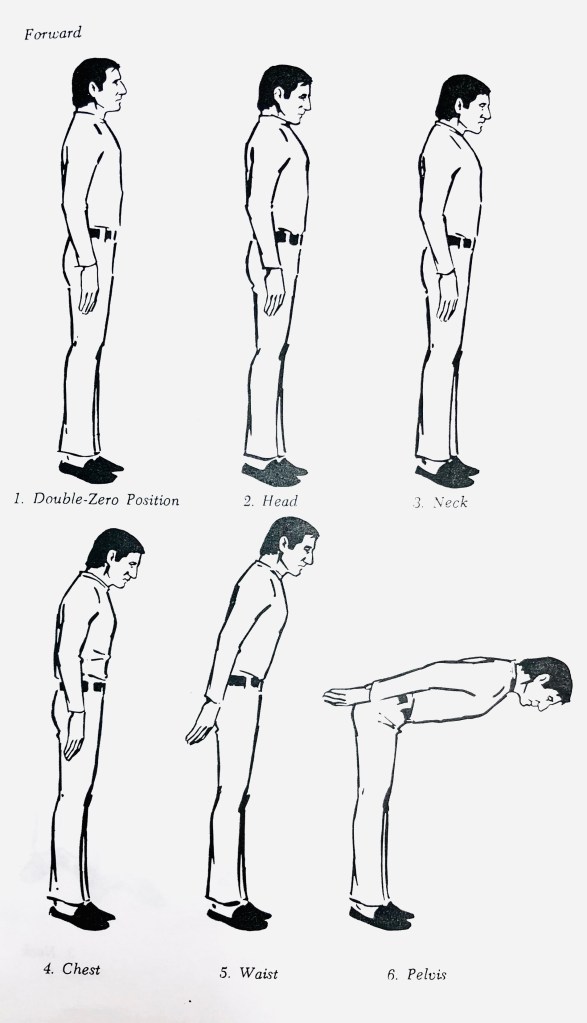
Now to the side:
Incline the head to the right, center, and then to the left, then center, and keep alternating. Then incline the neck to the right, keeping the head in line with it: It feels like a transtation of the head, but the head stays in line with the neck. Then back to center, and then to the left, and center. Now incline the head to the right, and the neck, and now, having done the neck alone, you should be better able to feel how to pull the neck up to the center, and then the head. Do it on both sides. Now incline the chest to the right, keeping the head and neck in line with it, like the top half of a marionette, and back to center and then on the other side, several times. Now incline the head, then neck, then chest to the right, and then up, and then to the left and up. Now the waist: The inclination of the waist alone will feel like a transtation of the chest, except that the head, neck and chest should stay in line with the waist instead of breaking. Pull the waist back to the center, letting it pull the pieces that are attached to it back to the center. Do it on the other side. Keep alternating, trying most of all to feel the waist lifting to the center by itselt. Now incline the head, then neck, then chest, then waist to the right, and then no one at a time, and then to the left. Now the pelvis: Incline it to the right, keeping the rest of the body in line with it, so that you tilt, with the left knee bending, and the left foot going to the half-toe. Now back to the center, then the other side, and then do the entire side inclination to each side.
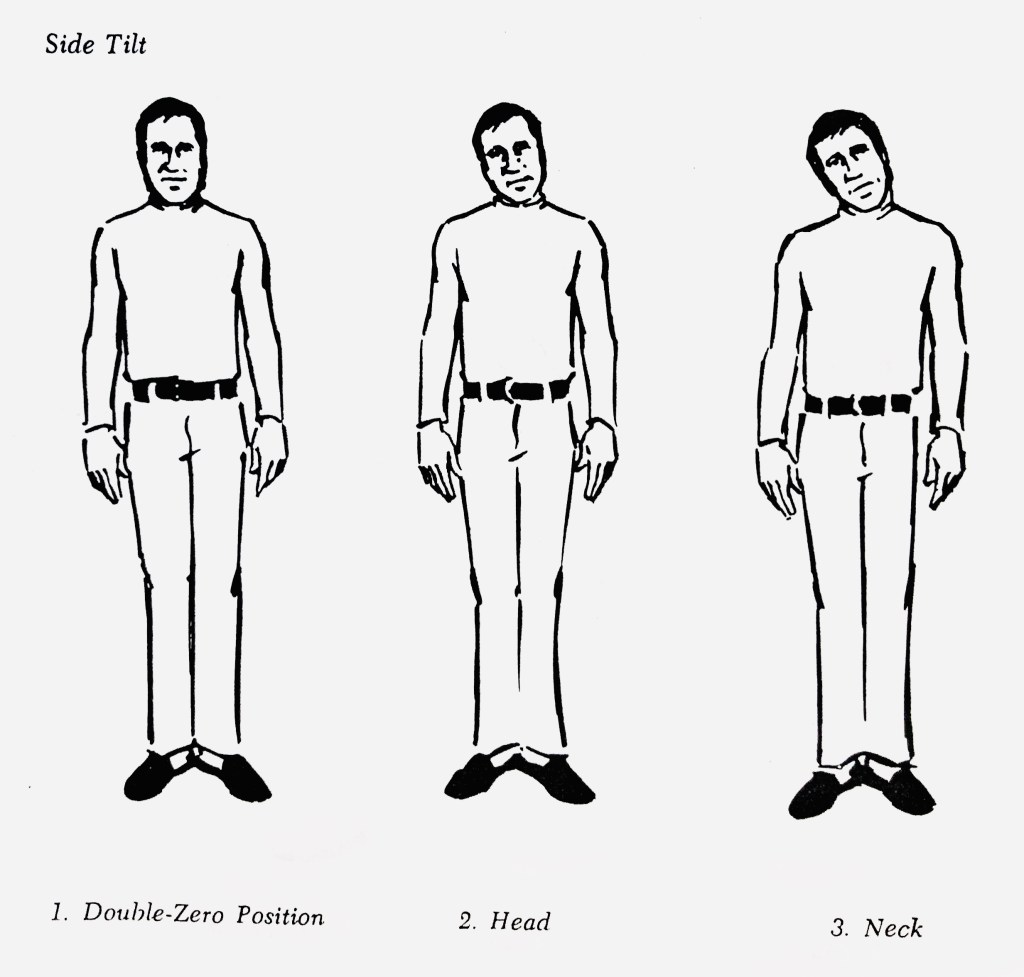
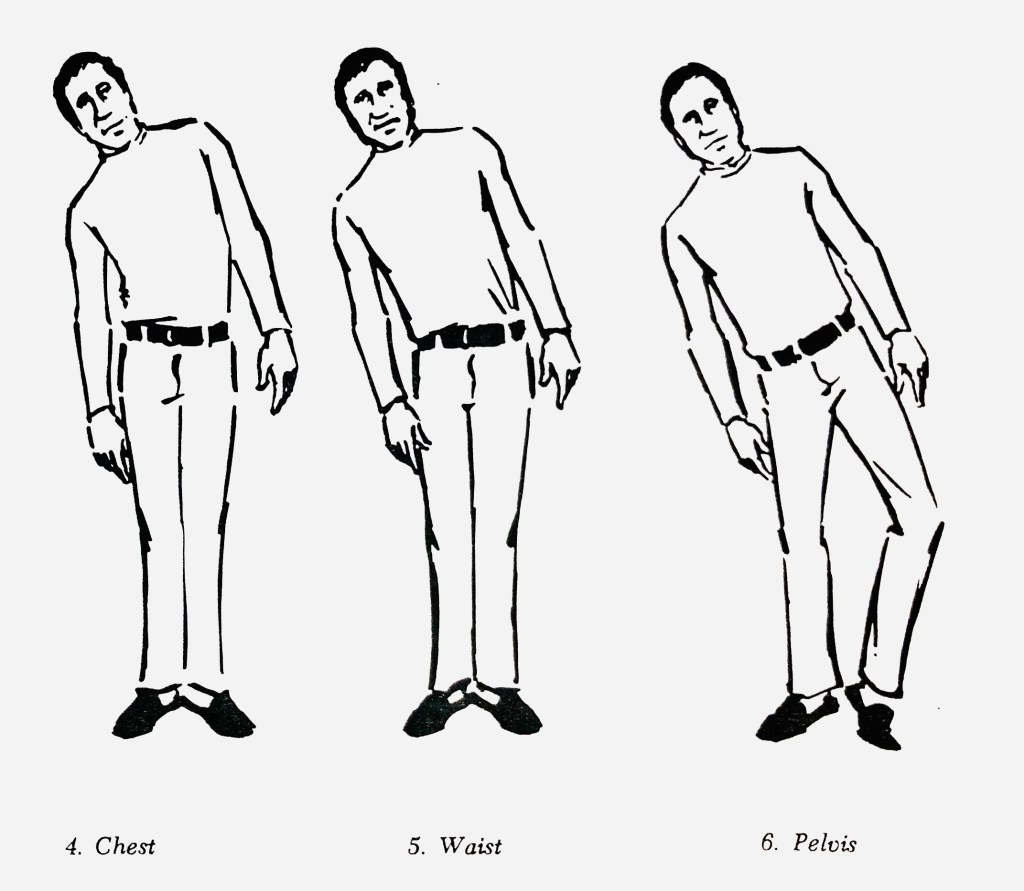
Do the same principle to the rear, one piece at a time.
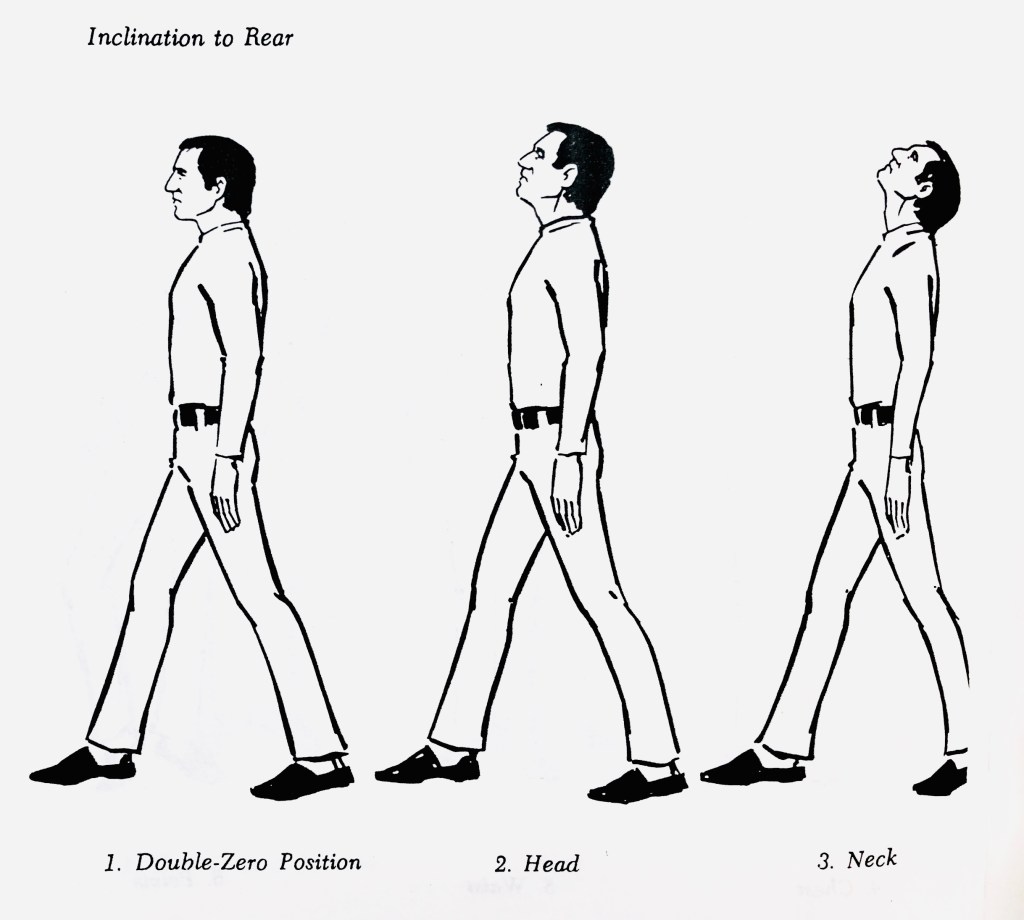
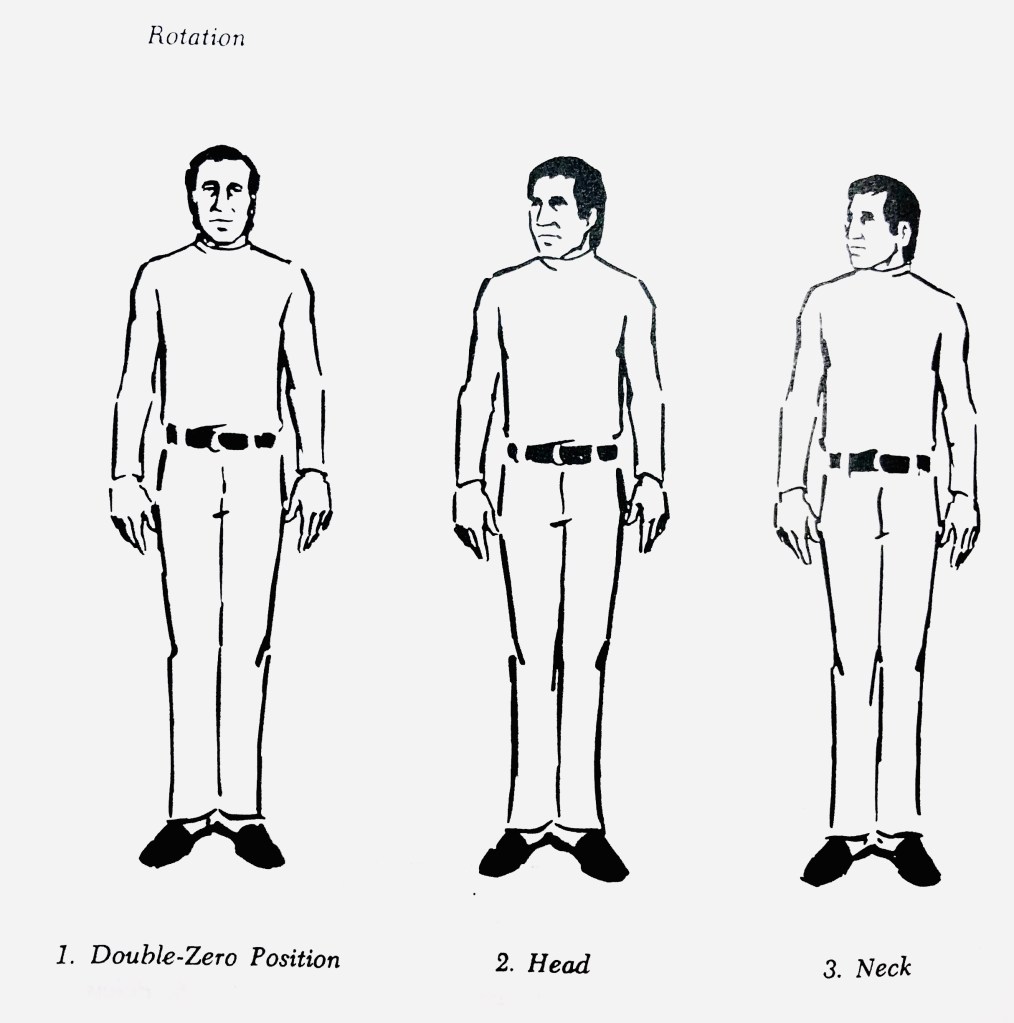
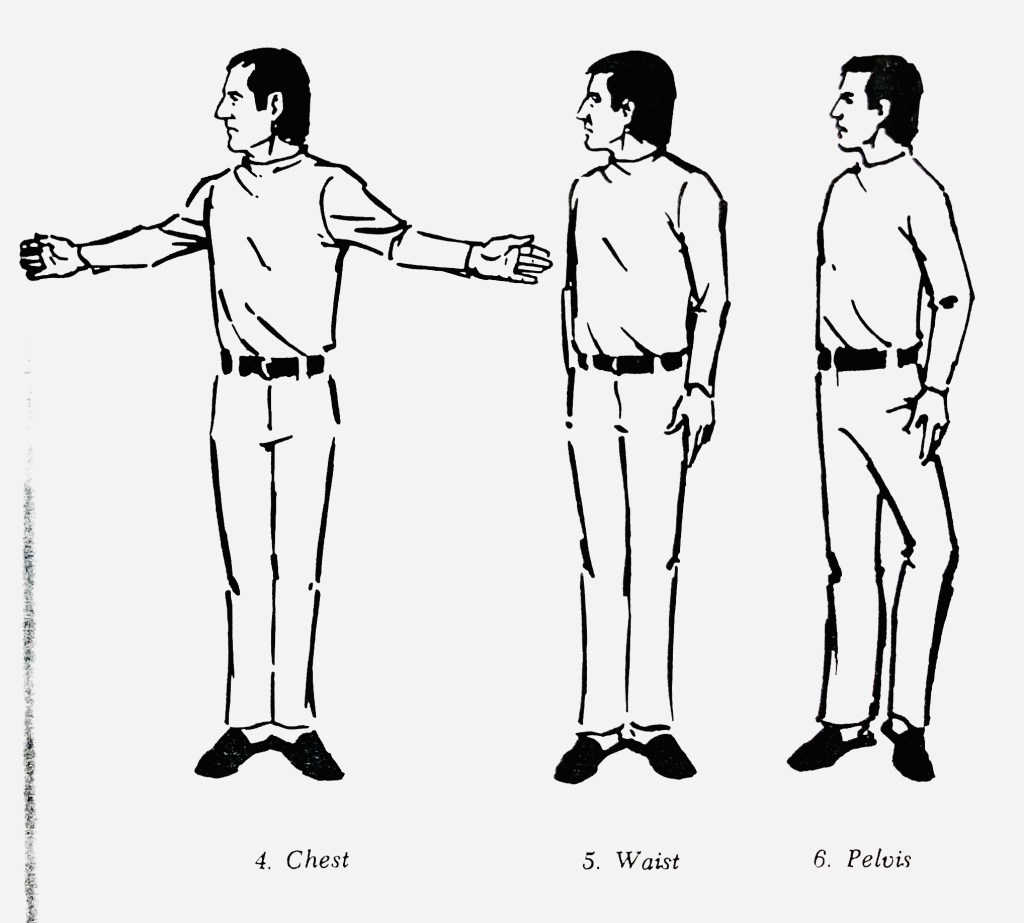
For the rotation, the difficult parts will be the neck and the waist. When you do the waist, try to hold the pelvis locked in place, and to twist just the waist around and back. By the time you finish this sequence, you should be all stretched apart, but you should understand the inclinations and rotations better.
Do the transtations.
Mirror Exercise:
Have the group divide into partners, with each partner facing the other, about three feet away. Person “A" of each duet is to do an action such as putting on theatrical makeup, or making a salad, etc., and the other one, person “B," is to mirror the action: Do exactly the same motions at the same moment. Person “A" is to try to help “B" to follow, by moving fairly slowly, and by, in a subtle way, following at the same time that he is leading. Person “B" can follow best if he looks towards the eyes of person “A": He will be able to see both hands with peripheral vision; if he watches one hand, he may lose the other one. If “A" uses his right hand, “B" is to use his left-a mirror image. They begin, and do this for a while, until the instructor calls “switch," at which point “B" leads, and “A" follows. When “B" starts to lead, he is to continue the same action and rhythm that they were in while “A" was leading. It can change, but it should be gradual. When “switch" is called again, “A" leads again. The time between calls of “switch" should become shorter and shorter, and finally, the instructor should call “Both follow." At this point, they continue the action, both trying to follow, neither leading. This is the essence of the game: Neither ego should be in the forefront; both should be surrendered to the activity.
Transtation Circles:
Have everyone make a circle around the room, facing counter-clockwise. All transtation the head forward, and the chest forward, and keeping that position, create a walk that fits the character. Each can do his own walk. Then try it with the head transtationed to the rear and the chest transta. tioned to the rear. Then do it with the head forward and the chest rear, and then with the head rear and the chest forward. Now, start again, everyone is in a circle, head forward and chest forward; turn the head in toward the center of the circle, and look at the people across the way. The group is to start to walk, and is to evolve a walk: No one is to lead, each is to walk the way he sees the people across the way walking, and imitate it, so that everyone is doing the same walk. The walk that evolves will be based on who is in the circle, and different circles make different walks. After a definite walk has evolved, break and try the same thing with the head rear and chest rear. Then do it with the head forward and the chest rear, and then with the head rear and the chest forward. Now split the group into two circles, at opposite ends of the room. Each circle starts with the head forward and the chest forward, and each circle evolves its own walk: Each keeps its own rhythm and tries not to be influenced by the rhythm of the other circle. When each circle has its own individual group walk, stop, and have the members of the circles form two lines at opposite sides of the room facing each other. The lines are to walk towards each other, doing the walk they evolved in their circle, and as the two lines pass each other in the center of the room, they are to switch walks. Line “A" does the walk that it saw line “B" do coming toward it. Then form the circles again, and evolve a walk from the head rear and chest rear, have the lines face each other and switch walks again, and then try the same thing first with head forward and chest rear, and then with head rear and chest forward.
Illusion of Climbing a Ladder:
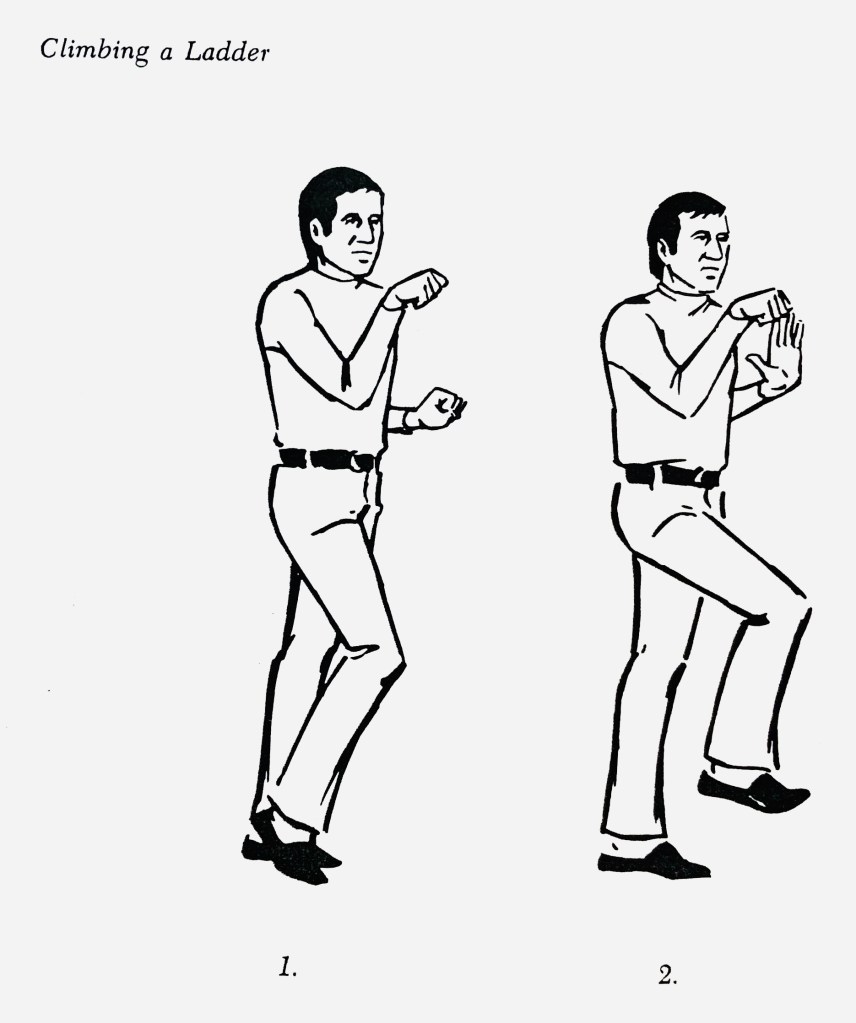
Imagine a ladder in front of you. Place your hands on two of the rungs, one higher than the other: right higher, and left on the lower rung. Keeping the right hand still, let the left hand release its rung, and place it on the rung that is next higher than the one the right is on. Stop. There should be about ten inches between rungs. Now, keeping the relationship between the two hands, keeping ten inches between them, move them both downward about ten inches, so that now the left is at the level the right was on, and the right is down where the left was in the starting position. Stop. Now release the rung with the right hand, and place the right on the rung that is higher than the one the left is now on. Stop. Now move them both downward ten inches, keeping the space between them. You always maintain the distance between these imaginary rungs. Keep doing this over and over until it is familiar. As you release the hand from the lower rung and place it on the higher one, say to yourself the words, “Round, place," and as you move both hands downward the ten inches, say to yourself, “Climb."
The feet:
Lift your right foot into the air, as if you were going to put it on the next rung of a ladder, but since there is no ladder there, place the half-toe of the foot on the floor, next to the left foot—the right knee is now bent. As you do this, say to yourself, “Round, place." Next, rise up on the half-toe of both feet, straightening both knees, so you’re way up, and when you’ve reached the top, come down, bending the left knee, and going to the half-toe of the left foot. As you do this, say to yourself, “Climb." Now lift the left foot from the half-toe in a climbing movement, and then put it back on the half-toe, then rise up again, and then bend the right again. Keep doing this over and over until it’s familiar. The words for the hands and the legs are the same, and they coordinate that way.
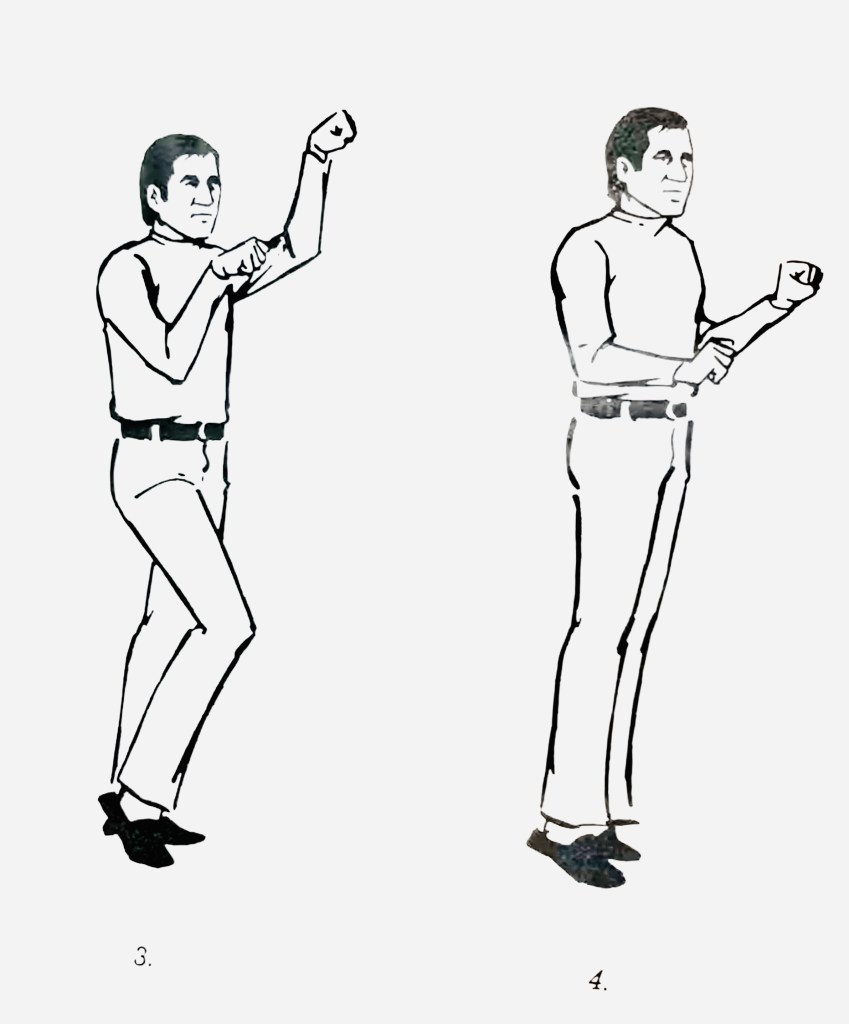
Start with the right knee bent, and the left hand low. On “Round, place," at the same time, place the left hand on the higher rung as you lift the right foot in its climbing motion and put it back down on its half-toe. On “Climb," rise up on both toes, straightening both knees, as you pull both hands down the ten inches. Keep going. It gets easier every day you practice it. Next, look at the homework assignment. Now, if there’s time, do some duets.
Homework Assignment:
Chest impulses with handling objects.
 Julien's Art Works