Biography
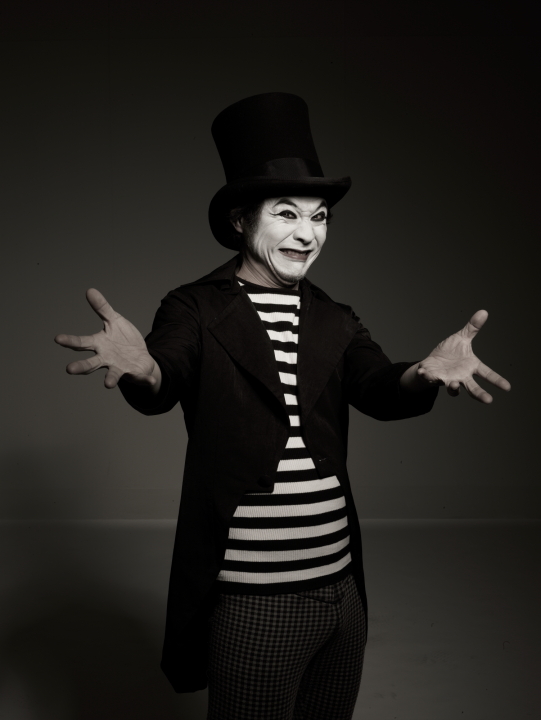
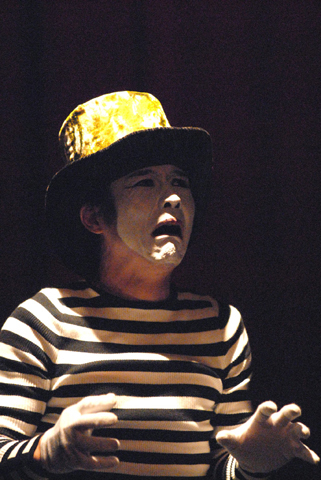
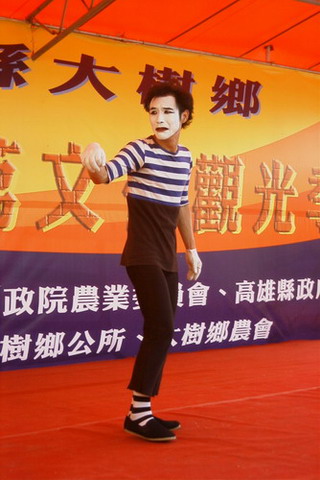
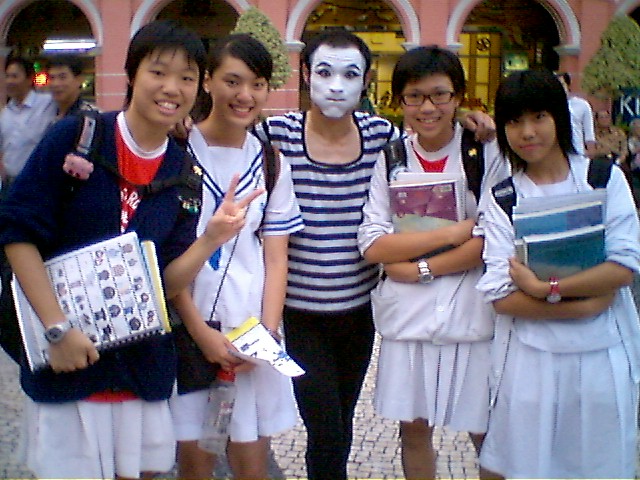
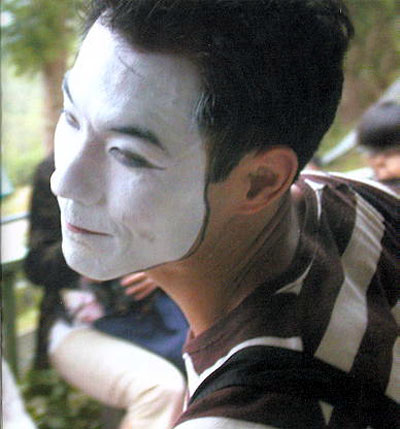
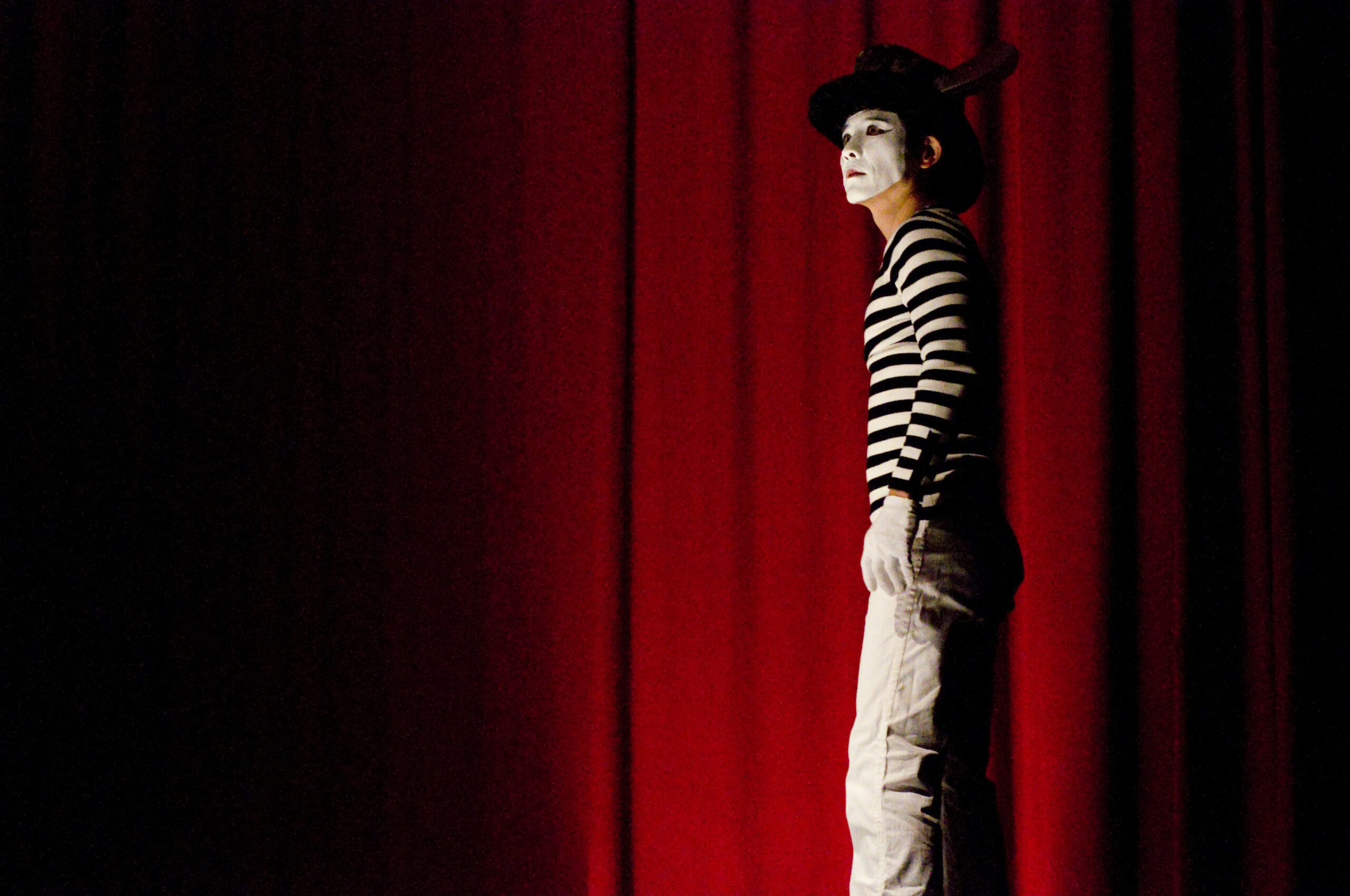
One of the greates Mime player in Taiwan
About Me
I have thought about it for a long time — writing about myself doesn’t seem too difficult, but introducing my work and what I do for a living feels a bit harder! That’s because I don’t follow a single career path like most people. Cross-disciplinary? Not quite. My work and my passions are inseparable — my interests are my work, and my work is my interest. I think that’s the most perfect description of myself! (Apologies — I’m at a loss for words.)
Let me start with the jobs I’ve had. After graduating from the Fine Arts program at Fuhsing Art School, I joined a children’s movement and performance company as an artist and choreography designer. Then I served in the military. After discharge, I worked as a window display designer for a Hong Kong fashion company, then moved to an advertising agency as a graphic designer, and later to a design firm. Around that time, I started taking on mime and commercial performance projects. Without realizing it, the performance work kept growing — so much so that I had to quit the advertising agency to focus on performances full-time. That was when my life took a major turn.
As I performed, I intuitively felt my theatrical knowledge wasn’t deep enough — I couldn’t convey profound emotion. So I wrote a letter to Lee Kuo-Hsiu, director of Ping Fong Acting Troupe. He called me right away and invited me to sit in on one of his productions — essentially as an observer — so I could study how he directed and how actors performed.
After leaving the troupe, I began creating my own mime pieces and original scores. But I hit another wall — I felt I needed to study dramatic theory, and considered enrolling in a drama school. I discussed this with Lee Kuo-Hsiu, and I will never forget what he said:
“Given your experience and background, dramatic theory is unnecessary for you. Your practical experience probably exceeds that of most professors. If you really want to understand dramatic theory, just go buy a few books on the subject from Chongqing South Road and read them. Otherwise, if it’s possible, I would suggest going to Paris to take a look.”
— Lee Kuo-Hsiu
And so, although I had been accepted into an arts college, I ultimately wanted to see the birthplace of modern mime. I decided to go to Paris. But where would the money come from? I spent a year studying French at NTNU’s French Language Center and working part-time to save up. After a year, I had saved NT$290,000, and I was on my way.
Life in Paris was hard at first. I only brought NT$290,000, and with the exchange rate at 1:5.6 against the franc, it didn’t stretch very far — rent, food, and tuition all needed to be covered. So I started performing street mime behind the Pompidou Centre, earning just enough for food and coffee. I also worked as a life model at an art studio, where I got to know an elderly painter. Watching my drawings, he told me: ‘This is 1995 — painting is no longer about copying reality.’ That struck me deeply. The artistic education I had received always emphasized making things look ‘realistic.’ Going to Paris was clearly the right choice — it opened my eyes. After seeing my fellow students’ work at the studio, I felt disheartened. I had never learned to express myself through painting — I could only copy. I nearly gave up on art altogether. ‘Then I’ll keep performing,’ I told myself.
Eventually, my money ran out. I sold my TV and computer to buy a plane ticket home. A Taiwanese classmate secretly slipped NT$400 into my hand so I could get from the airport back home. When I arrived back in Taipei, I found the apartment empty — my family had moved without telling me. Fortunately, the phone number hadn’t changed, and I was eventually able to reach them and come home.
Back in Taipei, I needed to find work. I started as a graphic designer at a friend’s company. Later, a classmate told me a film production set needed an art director and brought me on board. On set, I met a couple — the husband was a film director, and the wife directed theatre. My background in mime was seen as novel and interesting in both the advertising and theatre worlds, and I plunged headfirst into both. After completing my 56th commercial, I drew the curtain — clients unanimously felt I was overexposed, so the work dried up. But there was still theatre!
Well — it was only when I realized my expenses were outpacing my income that I discovered that three months of rehearsal for four performances earned me just NT$10,000 — completely unsustainable. I brought this up with the theatre director, and then… I was written out of the script. That’s the reality: theatre runs on passion.
I’m sorry — the hunger in my stomach is stronger than my passion.
After leaving theatre, I truly committed to my mime creative work. Then Fish Leong’s concert came knocking, opening a new door for me — I began taking on concert work. After concerts ended, a friend introduced me to a role teaching drama and mime at a vocational high school for two years.
Around that time, I kept receiving calls asking me to recommend someone for a clown role. A month later, they called again — the clown wasn’t right, could I suggest a magician? Another month passed, and they called once more: did I know anyone between a clown and a magician? I said I had already recommended everyone I knew. What exactly did they want? I suggested I come in and audition myself to find out.
Turns out they wanted someone who could mimic both a magician and a clown — which is precisely what mime is! And so I joined Jay Chou’s World Tour team, where I remain to this day.
But didn’t I say I had almost given up on painting? Well — concerts come with a lot of downtime. In the first year, I often wondered how to use all that free time to broaden my horizons. I began by travelling widely. Once I had visited every city and seen every landmark, I fell back into reflection: what should I do now?
One day, I picked up a brush. After the first stroke, I couldn’t stop. Painting replaced the aimless boredom of idle time. Finally, there was enough quiet space to examine myself — and I could paint whatever I wanted, with no pressure, freely and fully.
During the COVID-19 pandemic, I began selling paintings. I then came to realize that my inner world doesn’t have to be expressed only through theatre or painting — it can also be told through food, which is closer to everyday life. Food can express stories, moods, and the world. I’m happy to share my fusion cuisine with everyone, and I hope people can taste the infinite beauty of this world through what I cook.